


Behind Every Cup: How We Make Your Coffee (And Why It Matters)
Here at Johns, we think coffee is more than just a drink — it’s a story. It’s a story that starts with the farmers who grow the beans, continues through the hands of our trained baristas, and ends in the cup you savour with every sip. In this blog, we’re opening the curtain to show you exactly how we make your coffee, the thought and care that goes into it, and why the beans we choose — from Roastworks Coffee Co. — make such a difference.
Whether you’re a regular customer, a curious coffee lover, or someone who just wants to understand what makes a great cup of coffee, this is for you.
Why Training Matters at Johns
Making coffee every day can look simple — but making great coffee consistently takes training, precision, and passion. At Johns, every member of our team goes through thorough coffee training from day one. We don’t just teach people how to make drinks — we teach them why each step matters, how each decision affects the final flavour, and how to maintain quality no matter how busy the cafe gets.
This means that when you order your favourite drink — whether it’s a flat white, cappuccino, latte, or espresso — you can trust that it’s made by someone who knows exactly what they’re doing.
Step 1: Starting Clean — Every Time
The first step in making great coffee is preparing the machine.
Before we make any espresso, our baristas remove the portafilter (that’s the handle that holds the coffee grounds) from the group head and purge the machine. This clears out any residual coffee from the previous shot and ensures there are no leftover flavours. It’s a small step but a crucial one — it helps guarantee that your coffee tastes fresh and clean, just as it should.
Next, we knock out the used coffee grounds from the portafilter. Then, with a brush or microfibre cloth, we carefully clean away any debris and moisture. This ensures the portafilter is spotless and ready for a new dose of coffee.
A clean machine leads to clean flavours — and that’s how every excellent espresso should start.
Step 2: Measuring Matters — Precision Every Time
At Johns, we don’t guess how much coffee goes into your espresso — we measure it.
Every shot starts with exactly 18 grams of coffee in the portafilter — no more, no less. Our baristas use scales daily to make sure this measurement is accurate. Why does this matter? Because even a small variation in coffee weight can change how the espresso tastes once brewed.
Too much coffee can make the shot bitter or strong, and too little can make it weak or under-extracted. Using the right amount every time ensures that each espresso we make is balanced and full-flavoured.
Step 3: The Art of Tamping
Once the coffee is ground into the portafilter, it needs to be tamped. Tamping is the process of pressing the coffee grounds into a compact, even puck. This ensures that water flows evenly through all of the coffee when brewing.
Our baristas are trained to level the grounds first, then tamp straight down with a firm and even pressure. Body posture matters here — leaning into the tamp while keeping it straight helps make sure the water flows evenly, which is essential for good extraction.
Step 4: Pulling the Perfect Shot
After tamping, the portafilter is placed back into the machine and secured tightly. This helps prevent leaks and ensures the water goes through the coffee like it should.
The barista then presses the button to start the espresso shot. From the moment the button is pressed, we start counting the seconds — because timing matters.
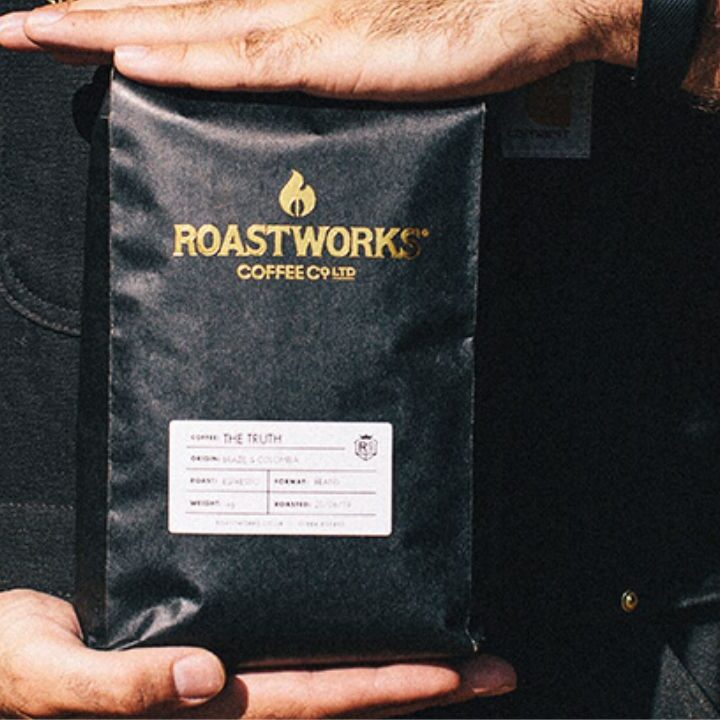
Our signature coffee — The Truth from Roastworks — has an ideal extraction window of 25 to 35 seconds for a balanced shot. This means that from the moment we start the machine, the espresso should take around this long to brew. It might sound specific, but timing this way helps us deliver consistent flavour in every cup. If the shot pulls too fast or too slow, it tells us we need to make adjustments.
Step 5: Dialling In for Perfection
Coffee beans are natural products, and they change over time — even from bag to bag. Temperature, humidity, and machine conditions can all affect the brewing process.
That’s why we check espresso times at the start of every day, after busy shifts, and during handovers between baristas. If a shot is running too fast, we adjust the grinder to produce a coarser grind. If it’s too slow, we make the grind finer. Think of water running through gravel versus sand — the finer the coffee, the slower the water moves through it, and the more flavour it extracts.
This process of adjusting the grind and shot time is called “dialling in,” and it’s something every trained barista masters so that every cup we serve is excellent.
From Farm to Cup: Why Roastworks Beans Are Special
Now let’s talk about the heart of your coffee — the beans.
At Johns, we use coffee beans from Roastworks Coffee Co., an independent speciality roaster based in Devon, UK. Roastworks aren’t just any roaster — they’re a team dedicated to sourcing high-quality beans from around the world and roasting them in ways that highlight their unique flavours. Roastworks
Ethical and Transparent Sourcing
Roastworks build long-term, transparent relationships with coffee producers. They don’t just buy coffee — they work with importers, exporters, and directly with farms to get beans that meet both high ethical and quality standards.
For Roastworks, transparency is key. They openly share how they source beans and why it matters. Coffee is one of the most traded commodities on Earth, and for speciality roasters like Roastworks, knowing where the beans come from — sometimes down to specific farms or cooperatives — is important both for flavour and fairness.
Here’s how their coffee sourcing process works:
-
They request samples of green coffee beans from importers and independent agents.
-
These samples are small roasted and cupped (a tasting process) to evaluate flavour.
-
Once they find a coffee they love, they order it and bring it into their Devon roastery.
-
They pay fair prices and build long-term relationships with producers, rather than switching suppliers year to year.
This approach ensures that the coffee we serve at Johns not only tastes great but is also ethically sourced and traceable — meaning you can feel good about every cup.
Roasting with Care and Expertise
At the Roastworks roastery in Devon, coffee beans are roasted using a vintage drum roaster — a beautiful piece of precision machinery that helps them roast coffee consistently and with character.
Roasting is where a coffee bean’s potential really comes to life. The heat transforms green coffee beans — which are hard and flavourless — into the aromatic, complex beans we know and love. Done well, roasting brings out sweetness, balance, and distinct flavour notes that reflect the bean’s origin and processing.
Roastworks take this seriously. Their roasting philosophy focuses on:
-
Highlighting flavour: Each roast is designed to reveal the unique qualities of the beans themselves, rather than overshadowing them with roast flavour.
-
Consistency: Using precise temperature control and experience, they ensure each batch tastes true to profile.
-
Sustainability: Their sourcing prioritises long-term producer relationships rather than quick profits.
A Closer Look at “The Truth”
One of the beans we feature at Johns is The Truth, Roastworks’ signature house blend. This is the coffee you’re probably familiar with in your favourite Johns drinks.
The Truth is crafted from beans sourced primarily from Brazil and Honduras. These coffees are selected for their flavour, texture, and how well they perform in espresso — especially in milk-based drinks.
-
Brazil (Sertaozinho Village): This part of the blend comes from smallholder farmers working on land that’s just a few hectares in size. These coffees tend to have sweet, smooth profiles that form a rich foundation in the blend.
-
Honduras (Finca Los Ranchitos y Las Anonas): Grown in high altitudes with cool nights, these beans add depth, complexity, and plummy sweetness to the cup.
Together, these beans produce a balanced espresso with notes of chocolate, toffee, and butterscotch, and a sweetness that works beautifully with milk — the kind you experience in a latte or flat white from Johns.
The Final Step: Your Coffee, Made with Care
All of this — from ethical bean sourcing and expert roasting to meticulous training and preparation — comes together in the cup you drink. When you take that first sip, you’re not just tasting coffee — you’re tasting the result of thoughtful decisions, expert technique, and a commitment to quality that spans continents.
At Johns, we believe that great coffee is more than flavour. It’s about people — from the farmers who grow the beans to the baristas who craft your drink. Every step we’ve described here is done with care, precision, and respect for the craft.
So the next time you order your coffee with us, take a moment to enjoy it. Know that it’s been made with intention, guided by training, and built on a foundation of excellent beans from Roastworks Coffee Co.
That’s the story behind your cup — and it’s one that Johns of Instow & Johns of Appledore are proud to be part of.

